AI Workforce Disruption:
Rewriting the Future of Work
Artificial intelligence is reshaping the future of work faster than most boards imagined.
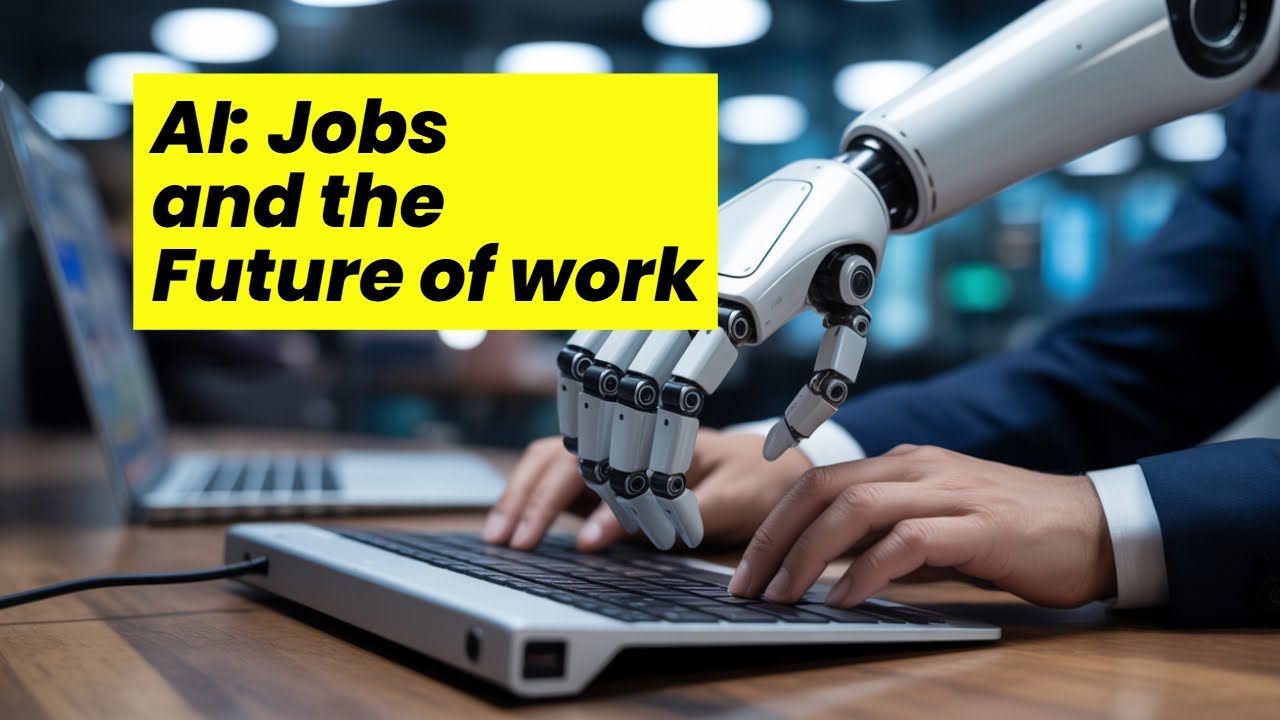 Watch on YouTube
55:32
Watch on YouTube
55:32 -

Managing Director and Senior Partner, Global Lead, People and Organization
Boston Consulting Group
-
AI is reshaping jobs. Boston Consulting Group's workforce chief shares leadership strategies for reskilling, managing risk, and turning AI disruption into a competitive advantage on CXOTalk episode 889.


Related Episodes
Artificial intelligence is reshaping the future of work faster than most boards imagined. In CXOTalk episode 889, David Martin, Managing Director & Senior Partner, Global Lead of Boston Consulting Group’s People & Organization practice, explains what CXOs should do now to guide their organizations through AI-driven change.
Drawing on direct experience with Fortune 500 clients and informed by BCG’s latest AI at Work research, Martin separates headline anxiety from on-the-ground reality.
The conversation includes:
- Which roles and tasks are most vulnerable to automation, and where AI can enhance rather than replace people.
- Why leaders and frontline employees view the AI threat so differently, and how to bridge that AI perception gap.
- Practical steps for executives: reskilling on a large scale, establishing ethical guidelines, redesigning workflows, and turning the “time dividend” from AI into a strategic advantage.
- Important global differences for multinationals, from rapid adoption in India to more cautious implementation in the U.S.
Watch this episode to gain clear, actionable guidance on protecting talent, unlocking productivity, and keeping your organization competitive as AI rewrites the future of work.
As always, join the live event to ask David your questions and share your views!
Key Takeaways
Leadership Moves Adoption from Experiment to Value
- Set a clear intent for using AI and connect it to outcomes employees value, such as removing low-value tasks or speeding up delivery. Be explicit about whether the goal involves headcount or output, and support this with examples.
- Rebalance the portfolio toward fewer, larger bets with clear owners and end-to-end scope. Pair each investment with adoption enablers: role-specific prompt training, playbooks for new workflows, and coaching for frontline managers. Reinvest some of the productivity gains into upskilling and change management, rather than booking all the savings. Morale should improve and adoption increase when employees see skill growth and practical relief from routine tasks.
Design Work for Human and Agent Teams
- Move beyond task-level automation to reimagine entire workflows that involve agents. Define the roles of the agent, the human, and the handoffs between them. Incorporate feedback, escalation, and quality checks into the process, much like a manager mentoring a new hire. Treat voice and chat agents as systems that require coaching, updates, and performance reviews.
- Shift skills toward critical thinking, prompt design, system judgment, and overseeing multiple agents. Train staff to compare outputs across models, test their reasoning under pressure, and intervene when signals are diminishing. Encourage teams to propose and develop lightweight agents using approved templates, ensuring safety and alignment in innovation. The interview notes new manager-of-agent roles and emphasizes the importance of clear role design before large-scale deployment.
CIOs Are the New Enterprise AI Strategists and Guardians
- Involve the CIO in co-owning the company's strategy, not just technology plans. Use a cross-functional council to establish platform standards, data access policies, security practices, and reuse guidelines. Reduce platform proliferation by guiding functions toward shared services and standard tools. Strong centralized decisions allow teams to focus on outcomes rather than infrastructure.
- Collaborate with HR on governance related to onboarding, daily use, and offboarding, covering role-based access, security, and mental health considerations related to voice-based agents. Address shadow IT by providing safe options, clear approval processes, and rapid support for high-impact use cases. Expand the CIO’s role to include managing agent risk, alignment controls, and organization-wide training. The CIO’s influence will grow in fostering adoption and building trust.
Episode Participants
David Martin leads the global People & Organization practice at Boston Consulting Group, where he drives the firm’s comprehensive client strategies in organizational design, talent management, culture, purpose, change management, and the evolving HRTech landscape. Passionate about empowering organizations to thrive, David is dedicated to developing people strategies that not only build resilience but also foster innovation and agility. David has extensive experience across various industries, particularly technology, media, and telecommunications. As a key member of BCG's GenAI leadership team, he has played a pivotal role in rapidly expanding the firm’s GenAI offerings, successfully scaling the business to serve over 400 clients globally to date.
Michael Krigsman is a globally recognized analyst, strategic advisor, and industry commentator known for his deep business transformation, innovation, and leadership expertise. He has presented at industry events worldwide and written extensively on the reasons for IT failures. His work has been referenced in the media over 1,000 times and in more than 50 books and journal articles; his commentary on technology trends and business strategy reaches a global audience.
Related Episodes
In This Episode
AI's Impact on Jobs and Organizations
Michael Krigsman: AI is disrupting jobs faster than anyone expected. Today, we'll learn who's at risk, how to re-skill at scale, and strategies to separate winners from those left behind. Our guest is David Martin, global lead for people and organization at Boston Consulting Group. I'm Michael Krigsman, and welcome to CXOTalk Episode 889.
David Martin: Thank you so much, Michael. I really appreciate the opportunity. I love listening to you and the great interviews you've done, and so I'm very excited.
Michael Krigsman: Give us a sense of your work at Boston Consulting Group.
David Martin: I lead our people and organization business unit, and that is everything involving operating model redesign, talent and skills, culture, change management. So really, all of the people-related components that are now so important on the AI front.
Michael Krigsman: What do you see are the core dynamics that are driving changes in organizations as a result of AI?
David Martin: When ChatGPT came out in late 2022, I expected a lot more apprehension from companies to get their hands dirty. And one thing we're seeing is just widespread use of the tools. We see a lot of excitement from both employees as well as in their own lives, how they're using the tools.
There is a lot of increased uncertainty, both at the individual level, "What's gonna happen to my role in the organization?" As well as at the leadership level, "How do I craft a strategy around this dynamic market? Is my business disrupted?" So a great deal of uncertainty as well that companies are struggling with.
Workforce Shifts and AI Adoption Challenges
Michael Krigsman: Could you identify any large workforce shifts that are already taking place? Or is this all really kind of pushing into the future?
David Martin: It's both, but certainly, to the first part, there are a lot of workforce shifts. You could look at specific categories of jobs, so specific functions. You see a lot of push in the customer service domain, across obviously a lot of sectors. You see a lot in software development, you see a lot in marketing. And so you're already seeing workforce shift there.
A lot of it is, okay, how do individuals in their current role start to use the technology? How does their role change in these spaces?
I've spent a lot of work with software developers over the past year or so. I actually was one before I joined BCG. And the uncertainty about how do I use the tools and how do I deal with such a very rapidly evolving set of tools? You see GPT-5 come out yesterday, which brings a host of new capabilities.
So you're seeing the impact there on both the day-to-day work, as well as how they're feeling about it. There's obviously much more down the line that AI is going to impact in the workforce. So I think there's a lot still ahead of us.
Michael Krigsman: You raise a very interesting point about programmers and software development because I think many people were under the impression initially that the kind of jobs that would be automated would be, I'm gonna say more rote or maybe lower-skilled jobs.
But when you talk about major impacts in software development, it makes you realize that the impact of AI is just everywhere. The tentacles are everywhere.
David Martin: It is making folks question what their role looks like. It is impacting skilled labor, administrative tasks too, as you mentioned, kind of the toil that we talk about of folks' day-to-day life.
Very early on, historically one of the roles that was supposed to be most resilient to AI was in the field of psychology and therapy. And you saw data emerging in mid-2023 that actually augmented psychology was showing great benefit.
And so it really has been surprising the breadth of how it's impacting individuals' role, and how it's helping many roles that maybe didn't expect to be using AI so quickly.
Adoption and Value Realization in AI
Michael Krigsman: In terms of AI adoption, Greg Walters on LinkedIn asks a question. He says, "There's a statistic making the round stating that 46% of AI implementations are failing and abandoned." And I'd be really curious just to actually see that.
But he's saying there's also another stat that 40 billion has been invested in AI by companies, but resulting in only an 8% increase in revenue. So it seems like, at least according to what he's saying, that there's this tremendous investment, but not yet showing huge amounts of value. From a people perspective, do you have any reactions or thoughts to that?
David Martin: First of all, the stats don't surprise me. Maybe I'm a little surprised it's only 40 billion. But the notion of either A, some companies are struggling to realize the value and so they're calling it unsuccessful. Or B, that the time to value is long. So not necessarily that they're failing, but it's just not as quickly as they might want.
It comes for at least two reasons. One is companies did a really good job of decentralizing experimentation in AI, and so you saw what we call a thousand flowers blooming. And every different part of an organization was testing it in some place. So you saw a lot of initiatives.
And what our data shows is actually the companies who are showing success and positive ROI right now are actually doing fewer things. That was surprising in our research. Fewer, larger, more focused. Has been faster to value and more successful.
But I do think the other side of it is a timeline thing. I'm sure we'll talk about, and I've heard you talk with many of your guys previously about data quality, and really just some of the necessary enablers that an organization needs to actually get the most value out of it.
And so a lot of companies are having to now play a little bit of catch-up on just getting the ship in order. The other thing I would say around delay or maybe even decreasing the magnitude of benefit, which does get right to the heart of the people point, is adoption of an employee workforce is not always what the leaders and the decision-makers have expected.
We saw actually at a software company, 80% of the engineers had actually expressed excitement about using the new tools. When we actually looked at how their initiatives with deploying some of those tools was playing out, only 20% of the engineers were actually using it.
So, if even at that 20% has improved their productivity 100%, you're still at a much smaller amount of benefit than the company might have expected.
And so adoption challenges have probably been the most important lever that companies are now using or struggling with and then addressing to capture value. And I think the problem is, and I'm sure we can dig into it later, so sorry for the long-winded answer, but one of the problems with adoption is either they don't have the skills yet.
They haven't been taught properly how to prompt, or they haven't even been trained on how to use the tool. That's one side, the skills.
And one other component is leadership and have they communicated the vision on how they expect the role to change or how employees should be using it? What is the purpose of why they're rolling it out? Are they trying to save cost? Are they trying to increase output?
So, all of those types of people-related issues are many different factors diminishing adoption and consequently, companies might be struggling for those reasons as well.
Michael Krigsman: This is a comment question from Simone Jo Moore on LinkedIn, and it's fairly large. And actually, folks, I'm gonna ask you keep your questions on the shortish side so that the host, that's me, can more easily sort of read them. But here's what she says.
AI's Impact on Employee Behavior and Training
Michael Krigsman: It's a very interesting point. She says, "There's a growing concern of employees getting too attached personally to the company AI or using their own AI, and therefore there's two problems that arise. Number one, they're putting inherent bias into the system and sharing far too personal data, and there's not enough guidance. And number two is when they leave the organization, they're exposing that organization and themselves to mental health separation anxiety to the AI that they've been using."
David Martin: It does also point to the fact that training is not simply how to increase the output of the activities you do day-to-day, but training is also how to manage risk of AI. So, are you introducing biases not just about the personal information you share, but if you're in talent acquisition, are you introducing bias to the process?
So, one is around training on risk, I think, is incredible and probably a place that companies have under-invested. And then, training on how the AI works and how it's using your data, and I think the more we see employees understand the mechanics behind the models, the more we see them using it in ways that probably help address the first piece of it.
I would also encourage folks, if you're aware of it, which obviously great with the question, that's the first step is being aware of it, is there's a lot of places in some of these tools, system instructions inside of GPT, where you can actually do a purposeful job of managing what you're sharing that the GPTs should kind of base a big part of it to answer on. So, a lot of it there is about training.
Emotional Attachment to AI and HR Governance
David Martin: I do anticipate, by the way, on this second piece, around the emotional attachment that, especially now and in your Lenovo CIO interview, I think he did a good job of talking about now the prevalence of voice. And I do think and I see in my personal life as I use voice mode on many of these tools, it does start to establish a little bit of a sense of friendship there.
It's probably a good reason then to also be using AI in your personal life and not necessarily your enterprise tools. And that might soften the blow a little bit if you were to separate. But it's gonna be a challenge. Not a perfect solve to the second part of that, is that I wouldn't encourage personal use outside of work on your own model.
Michael Krigsman: I have to say that I also like the voice, and there have been times it's like you kind of forget that you're talking to a machine.
David Martin: It's kind. It listens to you. It gives well-thought-out, creative responses. It comes with nice voices, and I saw GPT-5 is coming out with more voices. And, I mean, the scary thing is that's the worst it'll ever be. The tools are only improving, and I'm sure part of that is how do they become more empathetic?
Michael Krigsman: Subscribe to the CXOTalk newsletter. Go to cxotalk.com. We have genuinely extraordinary shows coming up.
So, Simone Jo Moore comes back and she says she thinks that there needs to be more proper HR governance over AI, during employee onboarding, role, security, how they work within their team, department, and organization, as well as an off-boarding strategy to address some of these issues.
David Martin: Absolutely true, and I think you see onboarding now becoming exactly to this point more cross-functional. It can't be an HR-only thing. But certainly how HR constructs learning and development and the process around onboarding and off-boarding is critical to make sure that they're including it.
And probably including it more and more, because some of the other skills they might be training on as part of the onboarding process, now the AI can handle on its own.
So, completely agree with that one wholeheartedly. I'd also say, some of the tools that HR organizations and third-party software providers are coming out with. Employee engagement platforms, so a lot of companies, HR departments are pushing on, "Hey, can we have a single pane of glass for a chatbot to work with employees and be more asynchronous and self-serve?"
And I think you'll see the onboarding process also have that, where employees are a little bit more willing to ask difficult questions. And so I think that it's true on the onboarding process, some of it is structure and some of it is enhanced tools will actually help to deliver that type of training as well.
Michael Krigsman: Just an order here on Twitter, on X.
Adoption, Vision, and Cognitive Skills for AI
Michael Krigsman: Arsalan Khan says, "As a disruptive tool, do you think organizations are not adopting AI fast enough due to the lack of vision by the executive leadership?"
David Martin: In many cases, I do think that executives are struggling with the uncertainty, and they don't have a concrete vision that if they tried to communicate would be compelling to the workforce. So I do think articulating the vision is one.
And then what's fundamental to the question is, "Are they thinking about AI disruptively enough?" And I would say no to that as well.
A lot of companies right now are challenging with near-term issues and cost pressure and inflation and geopolitical. And so, a lot of the uses of AI and the initiatives that companies are pushing on are too incremental. It is how to use AI to further automate tasks, or specific parts of a workflow. And they're losing an opportunity to actually rethink the workflow end-to-end.
And, I mean, that might mean consolidating roles. It certainly is how humans and agents are gonna work together to deliver a more seamless workflow. It's not just automating specific tasks.
And so, one pitfall that companies have certainly experienced is thinking too incrementally. And consequently, you're not gonna articulate an incremental vision. So yeah, absolutely.
We call that reshaping, either reshaping a function or reshaping a workflow that might be cross-functional. You do have to completely, almost clean-sheet design what that should look like so that you can have a meaningful enough and an opportunity maximizing enough approach to using AI.
Michael Krigsman: Kurt Milne on X says that, "If only 20% of an employee group is using AI, and that group has a range of skills and results, then the overall benefit may not meet expectations."
David Martin: No, that's right. That's why adoption is the biggest challenge facing companies right now, in terms of getting the value they're looking for out of it. And frankly, if you're rolling out tools and only 20% are using it, it's also a little bit deflating.
I'm certainly, I'm certain for the decision-makers to see low adoption like that, and for the employees who. You know, in that case, I think the 20% might be coming from my comment earlier. In that case were, 80% of the employees were excited about it.
Michael Krigsman: Kurt Milne comes back with a really interesting question. He says, "Are there new cognitive skills needed to use AI? For example, to run. You run AI three times, and you get three different outputs. Then the need to spend time and mental cycles reading and comparing to pick the best answer, and that is a different skill than copy editing."
David Martin: The path on that one specifically is you're gonna start to see agents that smash feedback up against three models and try to avoid hallucinations, which is great. It's what I do. I'm nervous about hallucinations in how I use it, so I'll take the output from one and put it in the other and pressure test it. So yeah, that is a skill set or competency that is changing in some of the roles.
You could take customer service, too. I think a lot of companies have a vision that a customer service representative, who right now is looking at dashboard with multiple screens and swivel chairing between them, getting instructed by those tools on what to do. That role might completely change to actually almost a manager of agents.
And that individual, then, is almost like a telecommunications network operations center, where they're looking for trends that are coming back from the agents themselves. They're looking for, "Hey, when and how do I intercept some of these customer conversations?"
So, the skills of being a manager and observer of agents and knowing when to step in or when to pressure test what they're doing is going to be prevalent in many jobs that currently don't require that at all right now, and don't usually even recruit for that type of skillset.
I also think, there's another one on this cognitive to some degree, that being really eager and willing to learn from the AI. So, again, working with software developers, talking about vibe coding and talking about how to introduce AI into their workflow.
Some of the most exciting interactions I saw the developers have with the tools is asking it questions. "Okay, why are you suggesting I do that?" And so really embedding into the day-to-day mindset of, "How do I use the tools as I'm using them to also help instruct me on what they're doing and potentially improve how I think about and do the job as well?" So yeah.
The Evolving Role of Creativity and Cognitive Skills in the Workplace
David Martin: A lot of new cognitive skills. You always hear: creativity will be more valued. And I think creativity will be introduced as part of many jobs that currently don't demand it. Critical thinking because of hallucinations. All of these competencies, I think, will be magnified in their importance.
Michael Krigsman: There's so much that you just packed into that response, but one of the things that, kind of, grappling with right now is when you have employees that are managing groups of agents rather than other people as employees, it raises a whole host of issues.
Not just about job displacement, but definitely raises that issue, but the nature of job augmentation with AI and the relationship of jobs to AI. Can you kind of unpack that for us a little bit?
Managing AI Agents: A New Workplace Dynamic
David Martin: You're gonna see a lot of roles working side by side with agents in a collaborative way or augmented way, or roles that are having to manage agents. It's a completely different muscle to build.
You mentioned earlier about treating AI like people. You heard Jensen Huang talk about the CIO is the CHRO in the future. Moderna integrated those two roles.
So, I do think one element of that is really being clear on the role that the agent's playing, not just how the role might change for the human, but the role of the agent's playing. And then that human who's working side by side with them, or looking over many of those agents, their ability to train it and coach it and intervene to give it more prescriptive detail.
Lot of how the interaction with agents will take place is very much like a manager and a frontline employee, where it is collaborative, it's coaching, it's training.
I think thankfully, the performance reviews and work-life balance matter less for agents, which I know has been talked about a lot. Or maybe in the future, we get agents who are very interested in those things.
But yeah, I do. A lot of components of the day-to-day life with an agent and how employees, and even frontline employees, like my customer service example earlier, are now going to become managers, I think is really important.
I think you'll also see, and again, maybe back to the cognitive point, a lot of roles, and how this is different than how companies were attacking digital for the past 20 years. A lot of roles themselves are gonna be expected to identify where to use agents in the workflow.
And to be trained on how to build agents, because English is code now, and some of those tools are pretty easy to spin up new agents. So, many different roles are gonna be thinking about, "How can I introduce agents into my workflow?"
AI's Impact on Leadership and Workplace Structures
Michael Krigsman: We have two questions, one from Greg Walters, one from Arsalan Khan, that both are questioning the role of the C-suite. And let me just read you both of these. And these are kind of loaded questions, but I think there's an interesting point here.
Greg Walters says, "AI is the end of the C-suite." And he also says, "Aren't AI and LLMs an example of the fall of centralized C-level command and control, shifting the way that we work, away from 19th century managed structures?"
And Arsalan Khan says on Twitter, X, "If executive leadership has little vision, then what chance of success does the CIO even have? AI is, again, like any other software adoption, which comes down to leadership and culture." In both cases, they're kind of questioning the role of senior leaders.
The Role of Leadership in Vision and Strategy
David Martin: First of all, to the very last point you mentioned on the role of the leaders and helping facilitate AI adoption, is the statistics on that are incredible. We have seen in our research that, maybe surprisingly, maybe not, but as adoption of AI increases, fear of job loss increases. Maybe that's intuitive, you see the power of it, and so you see places where I might be able to do more of what you do.
But the role of the leader is incredibly influential on that. So, 65% of employees, if they say their leader is not supportive or doesn't paint the vision, then they are fearful. Whereas, for the 25% of employees who say their leader is supportive, it's only 15%.
And one of those things is being able to articulate that vision that we talked about. And it's funny, I know you've had other individuals on the podcast who talk about the importance of vulnerability and transparency for leaders, which is absolutely true.
I think it's also been really challenging for leaders to be vulnerable and admit they don't have a vision for AI. And so you do have to be able to be both. So communicating the vision, incredibly important.
Now, the role of the C-suite, I do think the first question and the second question around "What does that mean for the CIO?" go hand in hand. Because, I mean, first of all, the C-suite is almost by obligation there for fiduciary responsibility.
But more importantly, for the success of an organization, you are gonna see more of those jobs be less based on practitioner skillsets and more based on strategic thinking. And so I think there's a huge role across those different functions for, "What is the strategy related to the business objective that I'm trying to solve?"
I think that the C-suite might consolidate roles, and you might see new types of roles emerging. Do more companies, as an example, integrate sales and marketing, and have a chief revenue officer, like a lot of software companies have done? Potentially. So, you might see the C-suite look different.
The Expanding Role of the CIO
David Martin: The role of the CIO, if you go back to that point that the C-suite is going to be much more strategic, I mean, this would be the point, is the CEO is dealing with a lot of uncertainty right now about what the strategy is, looking to a CIO to help be the thought partner there.
And, I mean, the problem is, again, CEOs are facing so many different challenges right now, I talked about inflation earlier and the multitude of those, that they're not as able to stay on top of the cutting edge trends.
Whereas a CIO, I think, is actually very excited and enthused by all of the changes taking place and the new technology that's coming out. So, the role of the CIO is more important now than ever, and their ability to help craft the corporate vision and not just the technology vision for the organization is more important now than ever.
Michael Krigsman: That also will require CIOs to upskill their understanding of how the business functions, because historically, the CIO role was. Exactly. Primarily inward-looking, taking care of systems. And now, what you're describing is a CIO/CHRO role in a way, but not just managing people, managing groups of agents.
David Martin: And managing all of the risk that comes along with agentic work flows, whether it be alignment risk or cyber risk or bias risk, reputational risk. Obviously, a multitude of new risks and a larger amount of all of those risks that a CIO is having to deal with, and having to spell the support the organization on.
You do. I mean, so it's funny because in HR you always talk about the HR business partner, and I think where IT for the past 40 years has consistently struggled with the dynamic of, "How do I have a tighter relationship with the business?" so to speak, those walls are being torn down.
And part of that is because, A, the importance of technology is visibly so much more important, B, the understanding of technology is increasing as well. You see, whether it be a president or GM of a business unit or a functional leader, more and more of those individuals are more familiar with technology, more informed on the importance of it.
And so you see more of a push-pull, more collaborative relationship with IT and the business, which I think is incredibly healthy. And then, yeah, I think the complexity of the CIO role is expanding.
Your point on managing agents, discovering them, managing all the risks, supporting the organization and all of that, I think is, I mean, again, I think you're gonna see CIO being a really critical role for companies who are realizing value from their investments.
Michael Krigsman: You should subscribe to the CXOTalk newsletter so we can notify you of upcoming shows. So, go to cxotalk.com right now, subscribe to our newsletter, so you can always join us 'cause we love your questions.
AI Adoption and Leadership's Role in Driving Change
Michael Krigsman: David, your AI at Work report describes frontline employees, a gap between frontline employees adopting AI tools. Fifty-one percent of frontline employees, according to your report, have adopted AI tools, and leadership has an 85% level of adoption.
Does that indicate resistance from frontline employees, or what's going on there? And maybe we can. Yeah. You can take a step back and just give us an overview of that research.
David Martin: This is a study we conducted globally across 10,000 employees of all levels. It focused on the impact that people components of an organization have on adoption and success at AI initiatives.
A lot of what we focused on was leadership behavior. We focused on talent and skills. We did get into tool quality where you see are the tools good enough to use is a piece of that, too.
Frontline employee, we look at adoption across all different levels of an employee base, and we did see that not only was there a significant difference between adoption between leaders and frontline employees, but also the trend stagnated, I think, which surprised us. The adoption of AI tools at the front line actually had not increased since the last time we ran the survey.
There's multiple factors for that. I do think part of it is what you said, which is there's a little bit of reticence to do it unless employees are told exactly what the objective is. Many employees feel, our data says, many employees feel threatened by job loss, and so they don't adopt.
But there's also, you can de-average that answer. Frontline employee, in many cases, frontline employees have less use for AI than leaders do. You're looking at retail store employees and field technicians who are more and more using it. But there's a lot of on-the-ground labor that takes place where AI is not going to be an important piece of technology for the employee to use in their day-to-day lives.
I'd say the other thing it highlights, which keeps me up at night, is I do think that leaders have observed that potential disruption to jobs and potential threat of AI to the jobs is probably as pronounced for leaders as it is for frontline employees.
I think there's been a lot of commentary, and rightfully so, that white-collar labor and that management all the way up to the top, there's a lot of opportunity to automate a lot of administrative tasks and make that part of the workforce more efficient, too. So, I think they realize you need to stay ahead of the curve and get familiar with the tools.
Michael Krigsman: What should business and technology leaders be doing in order to encourage broader adoption? Yeah.
David Martin: I do think how they prioritize which initiatives to push on has probably changed. Historically, for digital investment, you said, it's impact versus feasibility or time. And there is a new dimension that does get into the leader piece and does influence adoption a lot on selecting initiatives that also reduce the toil of an employee's life.
And maybe why leaders are using it more, is administrative tasks, as an example, are something that employees would prefer to not have to do, and to hand off to AI.
So, how leaders prioritize initiatives, and how they include employee centricity in the decisions they make on where to invest, I think matters significantly. I mentioned vision, and I just touched on a more specific part of a vision, which is objective setting. So, being able to really clearly communicate what the intent of the impact of AI usage is.
As an example, the tech company I'm working with, with their software engineers, obviously a huge opportunity to improve productivity. This company has no interest in reducing the size of that workforce, or the cost of that workforce.
In many cases across companies I'm working with, they're so far behind on their digital roadmap that they are absolutely looking for quad code, and all of the different tools that help cursor, all the tools that help support software engineering, as a means to accelerate their roadmap. No interest in cost savings on that front for this company.
But because they haven't said that specifically, most of the frontline employees we talked to are worried about that, and we see their adoption not be what we think it could be.
So, that's another piece of leader. The third one that came out in the research is leaders modeling the right behavior. And I think that comes in two forms. One is using it themselves, which we do see leaders doing, and we had this funny.
I was in India last week, and I was meeting with a CEO and his team, and they were preparing for a board meeting, and they had created custom GPTs for different board members.
And, I mean, you could debate the cost-benefit trade-off and all of that. It was a hilarious use case that I imagine a lot of C-suite executives are starting to learn how to do. And I was like, "You need to tell your employees some of these stories so they understand that you're embracing the technology, too, and that you're taking the time upskill yourself on it."
And the last piece I was. So, modeling the right behaviors. It also comes in the form of communication, and are you setting a positive tone around AI and the benefits that it can have on augmenting the workforce?
The last one is investing in training. If you are a company facing cost pressure, you're looking to reduce people costs with AI tools, then you need to be reinvesting some of that productivity savings in training and upskilling. And if you can cut 25% of time spent, you better be applying 5% or 10% of that back into training the employee base.
And we see that has a huge impact on employee morale. We see it has huge impact on the effectiveness of adoption. And it's great signaling to the workforce that you're not just doing it myopically, but that you have more of a plan around it. So upskilling is another big piece that leaders can really invest in.
Michael Krigsman: At the same time, yes, leaders should be investing in reskilling, but there is a lot of temptation to use AI purely for cost-cutting purposes. Let's get rid of. You know, it's industrial automation, only it's done with agents as opposed to machines.
David Martin: That's been true since predictive AI, to your point, and finance organizations have used it to improve forecasting and reduce some of the people cost they put into forecasting. So, undeniably that's true.
Rethinking Workflows and Organizational Structures
David Martin: My point there is they need to be reinvesting some of that savings. And you can't, as we would say, how do you cash the check on productivity? If it's in cost, you need to be reinvesting some of that, so.
Michael Krigsman: Elizabeth Shaw has an interesting question, and she says, "You talked about rethinking workflows. This is not a quick process, and is fraught with business danger." "For remember, there were plenty of organizations that experienced business emergencies and failed projects when, quote-unquote, 'redesigning' workflows for digital transformation and ERP."
David Martin: Being a former product manager and software engineer, this one touches on the software development life cycle. And they say, how does a bill become a law?
Well, you have market research and consumer insights, customer experience, org. You've got product management, UI/UX, solution architecture, enterprise architecture, DevOps, front-end, full-stack engineering, data. Everyone here probably knows all the SDLC.
And we've had some organizations say, "How do I turn that 11-person team that I don't really know if it's a two-pizza box team anymore, how do I take that 11-person team and do it with three people using agents?"
That is a disruptive change, exactly to the question. That would be a disruptive change to that workflow, that is rife with risk. I would say the first one is just quality risk. Can those three people actually sufficiently do those jobs at the same level of quality? And then, what would the downstream impact be by having a lower degree of quality?
But, you absolutely, if you're thinking about it end-to-end, have to have a plan. You need to do it so that your near-term decisions, you're making an AI investment, and with your people, you're not gonna try to rewind those later.
You need to have the plan, but call it a three-year end-to-end vision. And then you need to be looking at, what are the proper steps along the way? To get to that plan that allow for some of the risks that you described, whether be skilling risks or cultural risks by that type of disruptive stuff.
I think you'll see org restructuring too as part of that. I mentioned earlier kinda sales and marketing. You could think about engineering and product, things like that. Companies are not just going to be changing the workflow and how people. The ways of working, but also will be rethinking their organizational structures as part of that. Or if they don't, I think it increases the risk, for sure.
AI's Impact on Jobs and Education
Michael Krigsman: Microsoft Research recently came out with a very interesting report where they described jobs that are most likely to be affected or displaced by AI, and jobs least likely.
And the top jobs that they said were going to be displaced are interpreters and translators, historians, passenger attendants, and we could say parking lot attendants. I'm sure we've all been to. Yeah. Automated parking lots, and you have to pull out your phone and try to figure out how it works. Sales reps.
And among the least likely to be affected are dredge operators and lock operators, locks like on bodies of water.
David Martin: I lived next to Boulters Lock on the Thames in Maidenhead, England. It was one of the most exciting things in my day, was watching the locks work. I can imagine that is a difficult one to replace, yes.
I would say also, to pile on the ones that I'm sure will be in increased demand is, if you look at the amount of infrastructure investment that the US and other countries are making on their power, as well as in semiconductor manufacturing, there's a lot of both blue-collar and white-collar work that's needed there that will be, I think, immune to the impact of AI.
So I do th- There's a lot of manual task labor at the front line that we talked about earlier that is highly immune, as you mentioned. And I do. That's gonna have an implication, by the way, on education generally, and I know we've talked about how the education system works for a long time now.
But because those jobs are gonna be in increased demand, we're gonna need to rethink how we're building skills and building career paths so that we can encourage individuals to step into those roles.
There are many jobs, by the way, that will be significantly impacted by AI, but it will not lead to job loss necessarily, but actually just an incredible explosion of work in that space. You could take software engineering.
I'm sure there's going to be a lot. I wondered if lawyers, who people say are potentially, there's a lot of automation there, will there be 100 times the legal cases? You do wonder how much people use the productivity improvements from AI to increase output and activity versus just replace human labor.
Michael Krigsman: On this topic of training and skilling, a recent Fortune article warned that Gen Z should learn AI, but their job prospects may still be difficult because of structural changes caused by AI. So, what advice do you have for folks in Gen Z who are gonna be facing this wall of automation?
David Martin: You're seeing it some right now. Well, I believe I read that unemployment rate for recent grads has ticked up a little bit. It's interesting. We didn't talk about it, but I have a 18-year-old daughter who's about to go off to college, so there's a lot of conversation about how AI is going to impact her post-college career and what she should study and all those things.
But I mean, one great thing about Gen Z is I'm positive that they will be highly adaptable and resilient. They're obviously the savviest users of digital technology, and it's already embedded into most of the apps that they're using. So at least they'll have the familiarity with the tools.
Now, what are they going to do from a job perspective? You're gonna see an incredible explosion of innovation and new companies and new industries that emerge, just like we did with dot-com. And I think that Gen Z will be on the forefront.
And just like a lot of them created the YouTube creator industry out of nothing, I think you'll see a lot of really neat new industries emerge from the creativity that comes from that age group.
I do think probably their career looks very different than what my career looked like, but I think that's true between myself and my father as well. So that's just the nature of time and how we evolve.
But it is a concern. And like I mentioned, I do think it's a concern, too, on where they spend their time and how they invest in skills leading up to entering the workforce. Absolutely.
The Time Dividend and Strategic Use of AI
Michael Krigsman: You mentioned earlier this time dividend that arises from AI automation. It raises the question, to what extent are these benefits real? So as companies adopt AI, will they really migrate employees to higher-value work?
Or as we were talking earlier, will these employees simply be made redundant and fired as part of garden variety cost-cutting measures? How do you think this all plays out?
David Martin: It's dangerous to only focus on the cost measures, and here's why. Because I think a lot of companies who are probably asking those questions are also potentially ripe for disruption or their industry being disrupted. And so, I think you will see part of the time dividend start to go toward innovation.
If you think about the old Google model, and it might still currently be, but I know it from a long time ago, of spending 20% of your time thinking about other blue sky initiatives they're working on it. You will see companies more strategically allocate time from this productivity savings and time dividend toward innovation.
And it's because I think a lot of companies are gonna start realizing the disruptive threat of disruption, obviously.
I think the other piece on time dividend, and I'll use a specific example 'cause you asked, will they do higher value activities? Again, going back to software development, it's gonna be true in marketing as well, and we see that a little bit.
Talking to a company about using AI to improve the productivity of the daily coding, and that individual, that team actually was dealing with legacy IT that has a bunch of interdependencies, it's all the technical debt that all of our enterprise listeners here deal with every day.
And they have not been able to spend the time and the thinking power on refactoring code, and how do we design? This is a Java 8 to Java 11 upgrade or something to that nature. And so it's like, the strategy behind improving the quality of the existing assets that the company has, I think, will be increasingly an important role for the time dividend that you're describing.
Right now, back to the vision point, I do think, if companies aren't using it for cost savings, then many companies are not being creative enough or forward-thinking enough to not just say, "Okay, do more of the same."
So if you think about that example I just used is like, you could just say, "Okay, go build more code. And go deploy more code." Instead they're saying, "Okay, let's go rearchitect." So being really thoughtful about leaders in setting the expectations for how you're using the time, I think is really important.
We see that at BCG as well. We've rolled out a lot of AI tools for our consulting staff. They say they're saving time. We wonder, "Okay, are they sleeping more at night?"
Because for us, in a job where our employees work really hard and work/life balance is increasingly important, it's like, great, yeah, our goal with the productivity is they can get more time to have a more sustainable work-life. But you need a plan for what you're gonna do with it, to your point.
I don't think that everyone is just gonna say, "Do more of the same thing." That would be myopic.
Michael Krigsman: On the subject of consulting, I recently saw a demo of Agentic.ai tools that are designed specifically to replace junior consulting consultants doing research and gathering information. That. How real is this AI threat in consulting?
David Martin: It's an incredibly helpful tool for our consultants to use, is one thing. So and what I mean by that is, yes, it does do a lot of the work that many of our consultants do. So, there's a threat side of that. And then in the near term there's a, it takes a lot of toil out of their job and allows them to be more strategic.
I think it opens up opportunities for new business models for us. You know, are there opportunities, as an example, for us to provide more of a software as a service and a consultant as a service? 'Cause we might think we can train that type of model better than anyone else can.
AI's Role in Consulting and Tailored Solutions
David Martin: That's one example. But we are tracking, and by the way, I think all of us partners before we go into any of our client meetings are doing deep research on the client. We are pressure testing our own analysis and saying, "If I'm a client, what would I be seeing from AI? And are we exceeding that bar and justifying the fees that we charge?"
So, I think that it's been very important for consulting to appreciate the side-by-side threat.
We actually have been measuring what components of the value we provide our clients are replaced by AI, to your point, and it stretches across many different dimensions - industry expertise and all that kind of stuff.
And one place that AI has not come close to cracking the nut is our ability to understand our clients and their needs at a company-specific level very deeply, and to tailor our answers.
Right now if you're on deep research or if you're using any off-the-shelf tools to try to solve the strategic problems that we saw on a day-to-day basis, it's going to be more generic and more for the industry rather than more specific to the company.
And I think that's harder to replace. You'll, of course, see enterprise models being trained over time, I'm sure, but right now we feel like our ability to really think with the lens of our specific client in mind and tailor solutions for them is improved because of this.
Back to the point, I think it frees up our time to think more about those strategic tasks.
Michael Krigsman: This question about, or issue about LLMs not providing deep, company-specific information, I wonder if that's at least partially a data problem because I have seen a number of companies recently that go out to essentially aggregate, interrogate databases across a company.
And once you start doing that, you build up the data that you need that a sufficiently fast and powerful LLM could then use to report back whatever depth you might want on all aspects of the company, sales, marketing, everything, customers, you name it.
David Martin: Yes. And using a generative AI as a potential mechanism to leapfrog some of the. This is, I think part of. I think this is partly in there. Using gen AI to actually leapfrog and maybe mitigate some of the lack of connectedness with company data is also an opportunity.
I think you're spot on. Look, and that has fed historically into things like retrieval augmented generation, where you're using a off-the-shelf LLM. You're injecting some first party data in there to get something that's more company-specific. I think that's absolutely right, that's part of the near-term future.
I think the thing is, it. So, our clients are not necessarily saying that that is the highest priority place for them to be spending their time. And in a world where, as we know, talent is so slim, and IT talent specifically, and tech talent specifically, and core business needs for a company are so pronounced, and there's so much opportunity improve there, I have not seen a lot of our clients dedicate a lot of time and resources to what you just described, because they have incredibly important priorities they're pushing on in parallel.
Challenges and Opportunities in AI Adoption Across Organizations
Michael Krigsman: Arsalan Khan says. I'll just read his question verbatim, "What about power of one AI in one department versus AI in another department? Whichever department has more power, people, revenue, will they get their way? Who is the AI referee?"
David Martin: Right. Well, and you've seen that in data reporting and analytics now for the past 10 years, where every organization has their own analytics team that's creating their own dashboards. I think there's some truth to that.
I think it points toward the importance of IT and the enterprise IT strategy and platform strategy.
I think one danger that companies are facing is the fragmentation of platform decisions across different functions. And so resource allocation, to your point, that comes from central IT and the distribution of tech talent toward different functions is increased in importance.
There's something about human nature there in that question that's like, I think, of course, different parts of an organization are probably going to have more power and influence than others. AI is not solving for basic human nature at this point, for better or for worse. So, that will probably be the case.
I think it's really important to be at a CEO and CIO level though, in how the strategy is crafted there, because what you don't want to do is have a lot of function-specific platforms that, again, only really harden how the organization currently works.
And the more you can make the platforms cross-functional, the more you'll be able to realize a more seamless customer experience. So, ideally, you're not having a siloed platform.
Michael Krigsman: Your AI at Work report talks about global differences in AI adoption. I think this is very, very important for people understand. The report states that respondents from the Global South have significantly higher adoption rates than in the West.
For example, India, and folks, listen to this, has, India has 92% adoption compared to 64% in the US. Can you just tell us about the implications of this? It seems very profound to me.
David Martin: The implications are right, and I just came back from Delhi and Mumbai, and it's incredible what they're doing there. Some of it is job-specific. We talked earlier about just the nature of some roles using it more than others.
India obviously has an incredibly large and strong population of software developers and those types of roles that are more suited use it. Demographic difference. It does, it points out some of the differences in demographics too, and where some of just, countries will differ, because they're either a younger workforce or a more aging workforce. India on the younger side relative to some of the developed markets.
It d- But your last point, I think is the most important, which are, it does have implications on what you think the future looks like five years from now. Now, I think India, amazing users, you'll probably see a lot of innovation coming from there, because of the usage and because of time. Mm-hmm. Yeah.
Other than all we talked about there. I do think the US, while behind on adoption, is obviously making very important infrastructure strategic decisions, and so you'll still see, despite some lack of adoption, I think, incredibly important AI capabilities coming out of the US.
But, it is fascinating to see there's a very broad difference across geographies on usage, adoption, fear. India was also one of the highest in terms of their fear of job loss with AI, which goes back to the leader point.
Their interest in shadow IT was also pronounced and high. Individuals who have not been provided the right tools are using tools on their own, which is, I think, scary for CIOs and highly prevalent. It, we talk about that in the report. So, a lot of interesting geo-specific nuggets in there.
Optimism for AI's Future Impact
Michael Krigsman: David, fundamentally, are you an optimist, a pessimist, or do you think this world is so confusing that who knows?
David Martin: I'm a huge optimist. I'm not gonna end on a down point. It'll be down and up real fast. I had a daughter, four kids. One of my daughters passed away from pediatric cancer a few years ago, and I viewed it so close to breakthrough.
So, I'm an optimist because of the impact that AI is gonna have on science and on public health, and so I think you have to be excited just about the innovation that's gonna come through there.
I think human ingenuity and all of the past data we have in terms of job loss and recreation is like, we're an incredibly resilient population, an incredibly creative population. So, the doomer side of it, I'm very optimistic.
I think that we continue to thrive. We find the right ways to use AI as a helpful tool to make our lives better. So, very, very much an.
Michael Krigsman: Optimist. And with that, a huge thank you to David Martin. He's global lead for people and organization at Boston Consulting Group. David, I can't thank you enough. Thank you for being here with us today.
David Martin: Thank you, Michael. I've loved the time today, and really appreciate what you do. Your podcasts are fascinating. Encourage folks to sign up. So, it's great.
Michael Krigsman: Yes, yes. Folks, before you go, subscribe to the CXOTalk newsletter. Go to cxotalk.com. We have genuinely extraordinary shows coming up. You just need to look at the newsletter to see what we have coming up. I mean, really great ones.
Everybody, thank you for watching. Again, thank you to David Martin, and we'll see you again next time. Take care, everyone.